
2003 was an important year for Oban. We were founded in 2002, but 2003 was the year the company was incorporated at Companies House.
It was quite a time to be starting a digital marketing business. The internet was rapidly becoming part of everyday life. Google was already the search engine of choice, broadband was beginning to replace dial-up, and online shopping was becoming more familiar. LinkedIn and WordPress had just launched, while Apple’s new iTunes Music Store was changing the way people bought music.
Meanwhile, Facebook, YouTube, Twitter, Instagram and the iPhone were still years away. Spotify didn’t exist and Netflix was mailing DVDs to people in the US. A lot of the digital world we now take for granted was only just beginning to emerge.
Politics in 2003
The defining political event of 2003 was the Iraq War. On 15 February, between one and two million people marched through London to protest against military action, in what remains the largest political demonstration in British history.
The protests did not prevent the invasion. British forces joined the US-led military action that began on 20 March, Baghdad fell in April and Saddam Hussein was captured near Tikrit in December.
The year was also significant for the European Union. In April, Cyprus, the Czech Republic, Estonia, Hungary, Latvia, Lithuania, Malta, Poland, Slovakia and Slovenia signed the Treaty of Accession in Athens, paving the way for them to join the EU in May 2004.
Tony Blair was by now in his sixth year as British prime minister, George W. Bush was in the White House, Jacques Chirac was president of France and Gerhard Schröder was German chancellor.

Digital in 2003
The internet had been around for years, but by 2003 it was becoming more than a place to find information. Increasingly, it was becoming a place to participate. LinkedIn launched on 5 May, attracting 4,500 members in its first month, while WordPress followed a few weeks later, making it easier for people without technical expertise to publish online.
Apple was also changing how people bought and consumed digital content. The iTunes Music Store launched in the US on 28 April with around 200,000 songs at 99 cents each, selling more than a million in its first week. The third-generation iPod also arrived, offering up to 40GB of storage. Carrying thousands of songs in your pocket seemed almost absurdly futuristic.
Much of what we now associate with the internet was still to come. Facebook would launch in 2004, YouTube in 2005, Twitter in 2006, the iPhone in 2007 and Instagram in 2010. Spotify was still years away. Google, however, was already becoming central to how people found information, with search based largely on typing a query and choosing from a page of links.
That basic model would shape digital marketing for the next two decades, creating a need to understand how people search and how websites become more visible. The technology has changed considerably since then, but the underlying question remains: how do people in different places find what they need?
Today, that challenge extends beyond search to social, marketplaces and AI. Oban’s Local In-Market Experts, spanning more than 80 countries, help our teams understand what matters in each market.
Sport in 2003
On 22 November, England won the Rugby World Cup, beating Australia 20–17 in Sydney after extra time.
With seconds remaining, Jonny Wilkinson kicked the drop goal that secured England’s first Rugby World Cup victory. It was one of those sporting moments that became instantly familiar, replayed and discussed long after the final whistle.
Manchester United won the 2002/03 Premier League title, having overturned an eight-point Arsenal lead during the season to finish as champions.
There was also a major change at Chelsea. Roman Abramovich bought the club in July, beginning a period that would transform Chelsea’s fortunes and contribute to the wider transformation of the economics of English football.
And David Beckham left Manchester United for Real Madrid, joining a team already containing Zinedine Zidane, Luís Figo, Ronaldo and Roberto Carlos.
Business and technology in 2003
On 24 October, British Airways operated the final scheduled Concorde service from New York to London, bringing nearly three decades of commercial supersonic passenger travel to an end. Concorde could fly at around twice the speed of sound and cross the Atlantic in roughly three and a half hours, representing a particular vision of the future: faster travel and a world made physically smaller by technology.
Its retirement was, in some respects, a sign that the future was heading in a different direction. While Concorde was disappearing from the skies, the internet was making it possible to cross borders without travelling anywhere at all. Businesses could reach customers in other countries, while consumers could discover companies they had never heard of and information could travel around the world almost instantly.
But reaching another market was not simply a matter of putting the same message in another language. Search behaviour, languages and cultural expectations varied, creating a new set of challenges for international businesses as digital channels expanded.

Science in 2003
There were several major scientific stories in 2003. On 14 April, scientists announced the completion of the Human Genome Project, an international effort to sequence the approximately three billion DNA letters that make up the human genome. The project had been completed more than two years ahead of schedule, marking a significant moment in modern biology and demonstrating what could be achieved through large-scale international scientific collaboration.
The year also brought tragedy. On 1 February, Space Shuttle Columbia broke apart during re-entry over Texas, killing all seven astronauts on board. The disaster led to the grounding of the Space Shuttle programme while NASA investigated what had gone wrong.
There was also a new global public-health concern. Severe Acute Respiratory Syndrome, or SARS, spread internationally during the first half of the year. The World Health Organisation issued a global alert in March and, by May, more than 7,000 cases had been reported across around 30 countries. By July, the outbreaks had been contained.
Elsewhere, China sent its first astronaut into space. Yang Liwei completed a mission aboard Shenzhou 5 in October, making China only the third country to independently send a human into orbit.

Films in 2003
It was a strong year for cinema, with a number of films that remain recognisable today:
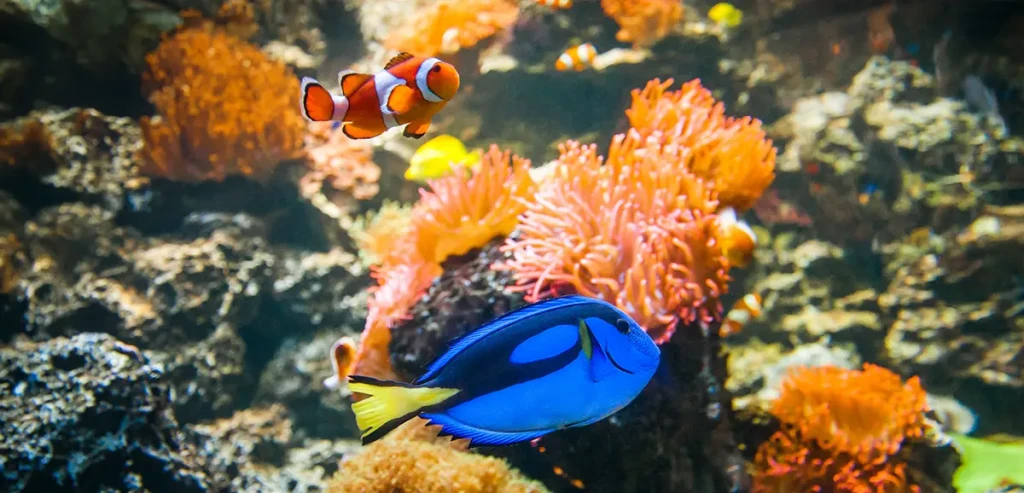
- Finding Nemo introduced audiences to Nemo, Dory and a rather anxious clownfish father.
- Johnny Depp appeared for the first time as Captain Jack Sparrow in Pirates of the Caribbean: The Curse of the Black Pearl.
- Keanu Reeves returned as Neo in both The Matrix Reloaded and The Matrix Revolutions.
- There was X2, Bruce Almighty and Elf, while The Lord of the Rings: The Return of the King completed Peter Jackson’s trilogy and became the highest-grossing film of the year, taking more than $1.1 billion worldwide.
- And Britain had Love Actually, which arrived in cinemas in November and gave us Hugh Grant dancing around Downing Street, Andrew Lincoln’s cue cards and a film that has somehow become an annual part of Christmas.
Music in 2003
The UK’s biggest-selling album of 2003 was Dido’s Life for Rent, released in September and selling around 2.7 million copies in Britain before the year was out.
The Black Eyed Peas had one of the year’s defining singles with Where Is the Love?, which spent six weeks at number one in the UK.
Beyoncé released her debut solo album, Dangerously in Love, establishing a solo career that would soon become enormously successful.
Justin Timberlake was making the transition from *NSYNC member to solo artist, while 50 Cent’s Get Rich or Die Tryin’ became one of the year’s biggest international albums.
And Britain discovered The Darkness and I Believe in a Thing Called Love, a song whose falsetto and guitar solos were less restrained than most of the year’s pop output.
If you wanted to own the music, however, the format was still usually physical. CDs remained dominant, while Apple’s new iTunes Music Store was beginning to demonstrate that digital downloads could become a mainstream way of buying music. Spotify was still three years away from being founded.
TV in 2003
Television was changing too. BBC Three launched in February, aimed particularly at younger audiences. Little Britain, starring Matt Lucas and David Walliams, would become one of the programmes most closely associated with the channel, with characters such as Vicky Pollard becoming part of British popular culture.
Reality television continued its rapid rise. I’m a Celebrity… Get Me Out of Here! returned for its second series, with former England cricketer Phil Tufnell crowned King of the Jungle.
The Office reached its conclusion with its Christmas specials, Pop Idol was still a Saturday-night fixture and Big Brother had become a national obsession.
The idea of choosing when to watch television was still relatively new. Streaming services were not yet competing for our attention because, for most people, there were no streaming services. Netflix did exist, but its business involved posting DVDs to customers in the United States. The transformation from broadcast television to on-demand viewing was still ahead.
Celebrity and popular culture in 2003
The early 2000s had a particular aesthetic. Low-rise jeans were everywhere. So were tiny handbags, trucker caps and the curious fashion decision to wear dresses over trousers.
Paris Hilton and Nicole Richie appeared in The Simple Life, helping to establish a new form of celebrity in which being famous could itself become the premise of a television programme.
Beyoncé was well on her way to solo superstardom. Britney Spears, Madonna and Christina Aguilera generated enormous headlines with their performance at the MTV Video Music Awards, while Beckham’s move to Real Madrid made him as much a celebrity as a footballer.
Mobile phones were becoming smaller, more colourful and increasingly capable. The Nokia 3310 remained a particularly popular choice, partly because its battery seemed to last indefinitely and partly because dropping one appeared to do more damage to the floor than to the phone. The mobile internet revolution, however, was still some way away.

From Google to AI Search
There is a clear parallel between 2003 and today. Search was becoming an important way to find information then, and it’s changing again now.
AI-powered search can interpret more complex questions, synthesise information from multiple sources and provide answers rather than simply a list of links. Discovery now happens across search engines, AI platforms, social media, retailers and publishers.
That means visibility is no longer just about ranking for keywords. Organisations need to be understood, trusted and accurately represented across this wider digital ecosystem.
Those questions become more complex across different markets. The technology may have changed considerably since 2003, but understanding how people find, assess and choose information remains at the heart of what we do.
Over two decades later
Digital has changed enormously since 2003, but our focus hasn’t: helping organisations understand markets, reach people and make an impact around the world. If you’re looking to expand into new markets, talk to us. Our teams combine global expertise with local knowledge across more than 80 countries. Get in touch.
Let’s accelerate action together
At Oban, we believe change happens when we act, support each other, and keep moving forward. These stories show how small steps can make a big difference. If you want to improve your digital marketing, get in touch. Let’s get started.