If you work in international marketing, your diary is more than a place for team meetings and budget reviews. It’s where you plot the moments that matter to your customers – the festivals, holidays, and cultural touchpoints that drive attention, sales, and loyalty.
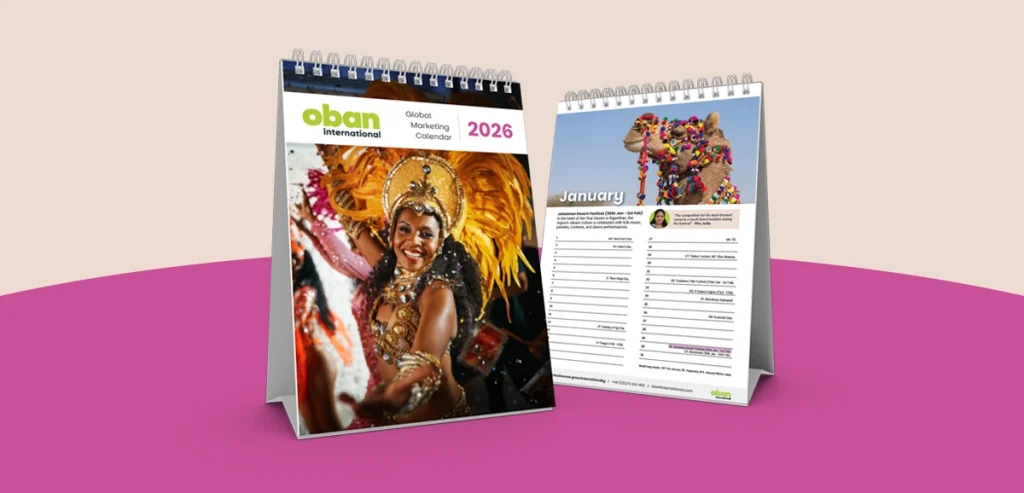
That’s why each year, Oban produces the Global Marketing Calendar. It’s not just a list of dates, it’s a planning tool designed to give marketers a genuine edge. With over 140 events from 60 countries, plus insights from our Local In-Market Experts (LIMEs), the calendar helps you:
- Get ahead of the curve: By planning campaigns in good time, not in a last-minute rush.
- See beyond the obvious: From global blockbusters to lesser-known local celebrations, spotting opportunities that others miss.
- Understand the why, not just the when: Each entry is explained with cultural context, so your campaigns feel relevant, not generic.
To give you a taste, here are ten stand-out dates from 2026, each one packed with marketing potential.
Ten global marketing moments for 2026
1. Winterlude, Canada (30th January – 16th February)

Ottawa’s Winterlude is part festival, part national ice party. For three weeks, the city fills with skating on the Rideau Canal, ice sculpture competitions, concerts, and maple syrup-laden treats. For marketers, Winterlude is a natural hook for domestic and inbound travel campaigns, outdoor apparel, food and drink promotions, and even home-heating or wellness products pitched against the cold.
2. Chinese New Year (17th February)

Chinese New Year is one of the world’s largest annual consumer moments. In 2026, the Year of the Horse arrives, symbolising energy, freedom and ambition. Across Asia (and diaspora communities globally), spending spikes on travel, luxury goods, food, and gifting. E-commerce platforms see record sales, and festive packaging is a proven driver of purchase intent. Smart marketers won’t just produce a red-and-gold product sleeve, they’ll tailor offers to themes of movement and progress that are relevant in a Horse year.
3. Cherry Blossom Season, Japan (mid March – mid May)

Cherry blossoms are big business. Hanami (flower viewing) season sees millions gathering under the trees, and international tourism into Japan surges as travellers seek the perfect Instagram shot. Retailers roll out limited-edition sakura products – from lattes to lipsticks – and themed experiences sell fast. The marketing opportunity isn’t limited to Japan: blossom-themed campaigns cut through across East Asia and even globally. Brands in travel, fashion, F&B and beauty can harness the season’s associations with renewal, fleeting beauty, and togetherness.
4. Eid al-Fitr (19th – 20th March)

The conclusion of Ramadan is celebrated with family meals, gifting, and generosity. Retail activity rises sharply in the run-up, particularly in food, fashion, jewellery, and travel. For marketers, Eid al-Fitr offers both practical sales opportunities and brand-building moments: promotions that respect the occasion’s values of family and gratitude can strengthen trust. Loyalty schemes, exclusive collections, or travel offers that help families reunite tend to perform well.
5. Vesak (1st May)

Observed by millions of Buddhists, Vesak marks the birth, enlightenment, and death of Buddha. Celebrations include temple visits, candlelit lantern ceremonies, and charitable giving. The commercial opportunity is more nuanced: overtly transactional campaigns are unlikely to land, but brands that engage thoughtfully with themes of peace, mindfulness, and generosity can connect. Wellness, sustainable fashion, plant-based food, and charitable partnerships are natural fits.
Ready to stay ahead all year long?
Explore the full Global Marketing Calendar for more!
6. FIFA World Cup (11th June – 19th July)

Football’s biggest stage will dominate global attention for six weeks. Every host city becomes a marketing hotspot, but the ripple effect extends worldwide: TV audiences in the billions, fans in pubs and living rooms, and spikes in sportswear, snacks, beverages, streaming services, and travel. For brands, the challenge is cutting through a crowded space. The winners will be those who plan early, align with authentic fan experiences, and find creative ways to connect beyond the obvious football clichés.
7. 250th Independence Day, USA (4th July)

The United States turns 250 in 2026, a once-in-a-generation milestone. Expect huge celebrations nationwide: parades, concerts, heritage exhibitions, and fireworks on a scale rarely seen. Spending will lift across domestic tourism, hospitality, food and drink, and retail tied to commemoration. For international brands, the opportunity lies in storytelling: campaigns that touch on legacy, history, and shared values will connect more deeply than flag-waving gimmicks.
8. Total Solar Eclipse (12th August)

On 12 August, much of the Americas will experience a total solar eclipse. These are rare events that spark mass travel, sky-high (literally) social media activity, and wall-to-wall news coverage. The marketing potential lies in the sheer spectacle: brands that act in real time – whether through themed offers, clever social media campaigns, or experiential stunts – can gain visibility far beyond their usual reach. Travel, tech, eyewear, and F&B brands have a natural edge, but any marketer can get creative with themes of light, shadow, and once-in-a-lifetime moments.
9. Diwali (8th November)

Diwali, the festival of lights, is one of the world’s most important retail peaks. Families gather to celebrate with lights, food, and gifts, leading to surges in spending across jewellery, clothing, homeware, and sweets. Beyond India, Diwali has growing prominence in countries with large South Asian communities, making it a global retail moment. Successful campaigns combine festive aesthetics (colour, sparkle, light) with practical gifting offers and culturally sensitive storytelling.
10. Super Saturday (19th December)

The final Saturday before Christmas is retail’s equivalent of extra time, and it’s often decisive. Shoppers who’ve left it late cram stores, while online retailers see peaks as delivery deadlines approach. For marketers, Super Saturday is about urgency and convenience. Think extended opening hours, fast fulfilment offers, ‘last chance’ deals, and click-and-collect. It’s a high-stakes day where the right message can convert procrastinators into purchasers, helping brands finish the year on a strong note.
Why the full calendar is an absolute must-have
These ten highlights only scratch the surface. The full 2026 Global Marketing Calendar contains over 150 dates across more than 60 countries, from the obvious global spectacles to the overlooked local moments that often prove more powerful. The entries are informed by expert commentary from our Local In-Market Experts, so you don’t just know a date is happening, you understand why it matters and how to use it.
The calendar is fully filterable by month, location, or type, making it easy to navigate upcoming events and tailor your marketing strategy to the regions and audiences that matter most. It’s also free. Not a trial, not a teaser – the whole thing, no strings attached. Think of it as:
- A shortcut to spotting opportunities your competitors might miss.
- An antidote to guesswork, with practical insight built in.
- A way to give your brand cultural confidence without blowing your budget.
In other words, it’s a resource that earns its place on your desk. Start using the 2026 Global Marketing Calendar today and make sure your campaigns are ready to travel.
Let’s accelerate action together
At Oban, we believe change happens when we act, support each other, and keep moving forward. These stories show how small steps can make a big difference. If you want to improve your digital marketing, get in touch. Let’s get started.