

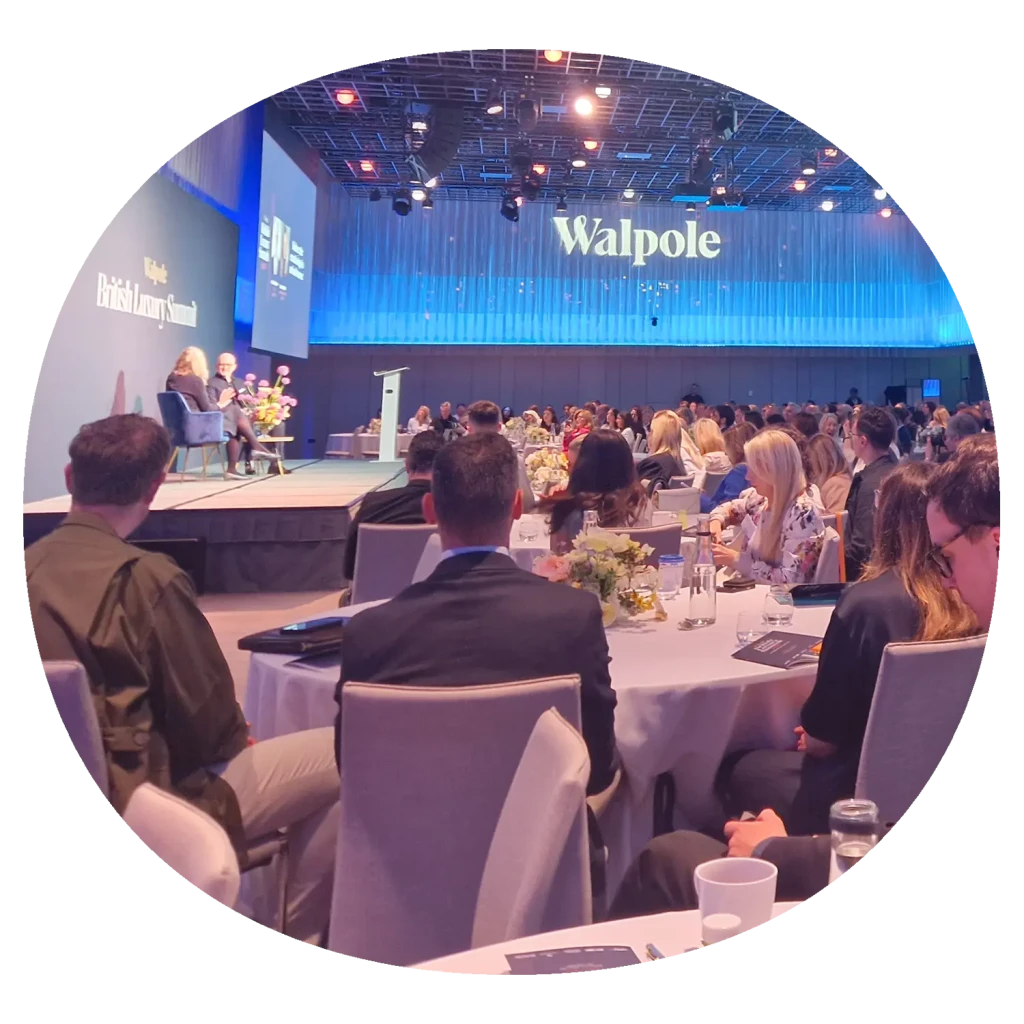
Oban recently attended the Walpole British Luxury Summit, where AI was one of the dominant themes of the day. Conversations focused on how AI is shaping the way luxury brands are discovered, compared, and chosen. Throughout, it became clear that the real change is happening long before a customer ever reaches a brand’s own channels.
The shift to early stage discovery
One of the clearest points raised was how quickly AI tools have become part of the luxury shopping journey. Around two-thirds of consumers in the UK, US and Europe now report using AI in some form during their shopping journey, with adoption particularly high among younger and more digitally engaged audiences. In the US, 68% of consumers say they have used at least one AI tool in the past three months, while 19% already use AI to discover or decide on brands, products or services (source: McKinsey).
Importantly, this activity is concentrated in the early stages of the purchase journey rather than at the point of transaction. Consumers are primarily using AI to compare options, understand categories and evaluate products before they commit, rather than completing purchases within AI tools themselves.
Among more engaged and higher-value shoppers, this role becomes even more pronounced. AI is increasingly part of the research and comparison process in categories such as fashion, electronics and beauty, where consideration sets are broader and evaluation is more complex.
Taken together, this shows that AI is now embedded in discovery and filtering, long before any direct interaction with a brand. Consumers are using it to understand which brands are worth considering, compare positioning across different labels, and sense-check value before engaging further. As a result, the first framing of a brand is increasingly taking place outside owned channels.
The rise of AI-led brand interpretation
Traditional search created a relatively clear pathway for brands. With strong SEO, content and media strategy, there was at least a predictable relationship between visibility and intent. That model is starting to break.
AI systems produce responses that sit between search and recommendation. They draw on editorial coverage, reviews, forums, video content and wider online sentiment, then compress all of that into a single narrative. For luxury brands, that has two important consequences.
- First, the brand is no longer the first narrator of its own story
- Second, what is being presented is an interpretation rather than a destination
This distinction matters because luxury value is heavily dependent on context. It’s not only about what something is, but how it is understood. And when that understanding is mediated, there is a risk that meaning is diluted.
Why luxury consumers are questioning value
Another recurring theme at the Walpole Summit was the growing pressure on trust within luxury. In recent years, prices have risen significantly in many categories, particularly handbags and core leather goods, without necessarily a corresponding increase in perceived creativity or innovation. That imbalance has contributed to a gradual erosion in trust among some consumers.
At the same time, expectations have become more exacting. Consumers are:
- More willing to question value
- More likely to compare alternatives before purchasing
- More sensitive to perceived consistency between price and product
This makes clear positioning more important than ever. Brands need to justify price and value, not rely on momentum alone.
Fragmentation is now defining the luxury customer base
Alongside this, the luxury consumer base itself is becoming more fragmented. Speakers highlighted a growing divergence between different groups, such as:
- Ultra-high net worth customers remaining active and relatively resilient
- Entry-level luxury continuing to show engagement, particularly in beauty and smaller indulgences (the well-known ‘lipstick effect’)
- The aspirational middle facing the greatest pressure, with lower purchase frequency and spend
At the same time, Gen Z is emerging as the fastest-growing luxury cohort, particularly in markets such as China. They are highly aware of luxury brands, but less loyal, more critical, and more focused on value and relevance than status alone.
The result is not a single luxury customer, but a more intricate map of behaviours across markets that brands need to navigate simultaneously.
Why AI raises the stakes for luxury brands
As discovery becomes more mediated, and as customers rely more on external systems to filter choice, the importance of being consistently understood increases.
This creates potential risk for luxury brands. If perception is fragmented across multiple sources, AI systems will reflect that fragmentation back. If messaging is inconsistent, or if the brand is represented differently across editorial, reviews and social content, the summary that emerges will also be inconsistent.
That’s why there was so much emphasis at the Summit on what sits outside owned channels. Reddit, YouTube, editorial coverage and independent reviews now function as part of the wider infrastructure that shapes how brands are interpreted at scale.
How luxury brands should respond
Practical implications include:
- Brands need to manage the inputs shaping perception, not just the outputs they control. WithAI systems drawing heavily from editorial, reviews, forums and video, off-site presence is a core part of brand building. The priority is ensuring those environments reflect a consistent and accurate version of your brand.
- Consistency alone isn’t enough. Narrative needs to be actively seeded across channels, not just maintained. If meaning is being assembled from multiple sources, brands need to shape where and how their story appears, and which signals are most visible.
- Owned channels, meanwhile, need to justify direct engagement. As discovery shifts elsewhere, websites and stores must offer something that cannot be summarised, whether through service, personalisation or a more immersive experience. Reducing friction and elevating experience will matter more as AI takes on more of the work in discovery.
- Brands need to pay closer attention to how they are interpreted. This is about how your brand is described, compared and understood within AI-generated responses, not just visibility and traffic.
In summary, luxury brands don’t just need to tell a clear story; they need to ensure it’s understood correctly in the spaces where people encounter it first. If you’re exploring how to achieve that, get in touch to find out how Oban can help.
Let’s accelerate action together
At Oban, we believe change happens when we act, support each other, and keep moving forward. These stories show how small steps can make a big difference. If you want to improve your digital marketing, get in touch. Let’s get started.