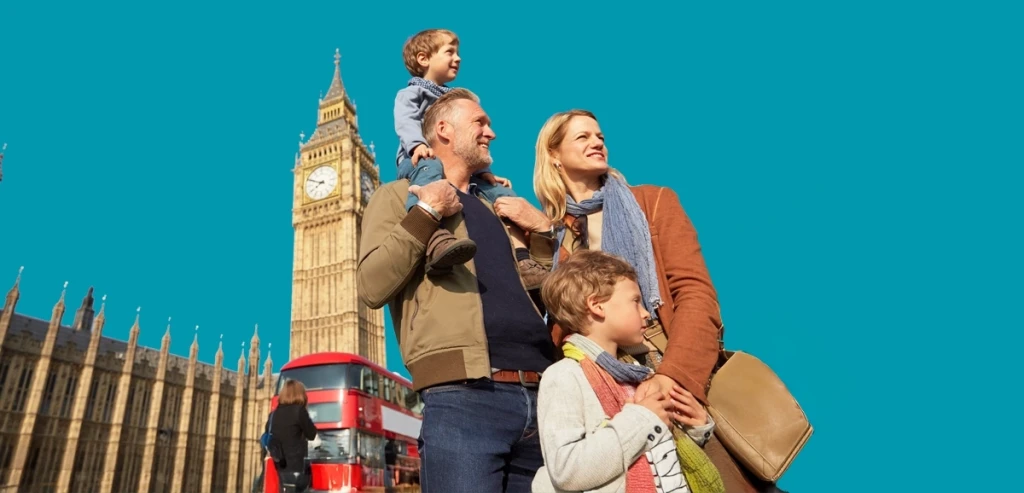
It’s late morning in Leicester Square in early March.
The square is busy but not overwhelming. A family steps into a café just off the corner, partly for a sit down, partly to regroup. Coats come off, phones come out, hot drinks arrive, and for the first time that morning, they stop moving.
They arrived in London last night. Breakfast was near their hotel, then a wander through Covent Garden’s market and street performers, before drifting across to Leicester Square as the crowds thickened towards midday. Now they have reached the point every city trip eventually reaches: “What should we do today?”
One parent scrolls Maps across Soho and the river. The other searches broadly for nearby activities while the children replay a TikTok they saw earlier of an open-top bus passing Big Ben and argue about the top deck.
Within the next hour, a decision will be made or a purchase completed. Not on flights or hotels, but on whatever fits the next few hours of their day. No one in this moment is planning a trip. They are solving the afternoon.
What the sightseeing funnel looks like on the ground
What happens next is the funnel in its purest form. The parents each open Google and start typing:
- things to do near me with kids
- london sightseeing bus
- indoor activities london today
- is the tower busy today
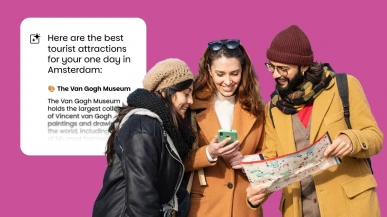
Google responds with a mixture of AI overviews, Maps results, reviews, and quick answers. The parents don’t scroll far. They rarely do now. The answer is largely assembled for them.
They open two attraction pages in Google Maps. They watch a short video. They check queue photos. They compare duration. A pause, and then one parent looks up from their phone. “Shall we just do that then?”
A paid result appears again on the next search, this time with price and departure location visible. Now it feels familiar. Decision made.
From their first search to purchase takes about 20 minutes. Across many attractions, this short path to purchase is not unusual. A large proportion of conversions happen inside 48 hours of arrival, often inside the same day and frequently inside a single session. The purchase is shaped less by inspiration and more by logistics. People want to know:
- Can we walk there from here?
- How long does it take in reality?
- Is it suitable for children?
- What happens if it rains?
- Are queues manageable right now?
- Does it fit before lunch or after?
The psychology is closer to choosing a restaurant than planning a holiday.
AI has shortened the journey further
With AI search, the biggest change is not a new ad format but the removal of steps. Search engines increasingly assemble answers before the click. AI overviews pull together reviews, opening times, distances and typical visit length. For sightseeing brands, this means the job of search or performance marketing is no longer simply to rank or even be clicked. It is to be recognised inside a decision that is already forming.
Brand becomes recognition rather than persuasion. If a user sees the same attraction name in Maps, in a short video and in a paid listing within ten minutes, it feels established. The human brain interprets repetition as reliability, especially in unfamiliar places.
That means creative clarity matters more than storytelling. A beautiful film about the spirit of London does little in Leicester Square at 11:15 am. A clear promise about route, duration and departure point does a great deal.
What does paid media look like when decisions happen in hours?
Short decision cycles change how channels behave. Performance-led campaigns often perform well in sightseeing because the platforms already hold the signals that matter most: location, movement patterns, time of day, weather and search intent. When someone physically enters Zone 1, the platform understands they are no longer dreaming about London. They are navigating it. In practice, this changes three things:
#1: Broad intent queries are valuable. People rarely search perfectly while walking through a city. They use fragments and voice queries:
- bus tour london now
- things to do in london
- what can we do nearby
- things to do before train home
Capturing this demand requires accepting ambiguity and letting targeting lean on context rather than precise keywords.
#2: Timing outranks monthly efficiency. Attractions do not have uniform demand across the day. Conversions typically cluster late morning, around lunchtime, and mid-afternoon as tourists move between landmarks. Rather than worrying about manual monthly pacing, the focus should be on feeding the platform high-quality signals – proper conversion tracking, first-party data, and regularly refreshed creative assets – so automated systems can optimise spend toward peak demand moments.
#3: Creative must answer questions instantly and be as rich as possible: Effective ads behave almost like signage, using all available assets to communicate quickly – images, logos, quality product imagery, videos, structured text, and extensions all help. They work when they immediately communicate:
- what it is
- where it starts
- how long it takes
- why it suits this moment
Not all tourists are the same tourist
A mistake in sightseeing marketing is treating visitors as a single audience. In practice, there are a minimum of three mindsets to consider:
- Pre-trip planners. Often international travellers still at home. They are cautious and reassurance-led. Cancellation policies, safety and reputation matter most.
- In-transit planners. People on trains into the city or at airports. They are shaping a rough itinerary and comparing categories of activity.
- In-city deciders. People already walking the streets. They are solving the next two or three hours (like our family in Leicester Square).
Each group responds to different messaging and different media structures. Conversion rates suffer when they are merged into one funnel with one tone of voice.
This becomes more complicated once you look at international visitors properly. A family visiting London from Birmingham behaves differently from one arriving after a long-haul flight from LA. The second group is managing tiredness, unfamiliar transport, different meal times and a weaker sense of distance. A ten-minute walk might feel reassuring to one visitor and risky to another.
The same listing, wording and imagery will not land the same way everywhere. Some audiences care first about price, others about clarity and predictability. Some want structure, others want flexibility. Even simple phrases such as “hop on” or “guided” carry different expectations depending on where someone lives. Working with Local In-Market Experts can help you understand local audiences in more detail.
Measurement has to reflect reality
Compressed journeys also expose the limits of neat attribution. A user might:
- see a short video on social while at breakfast
- check Maps after leaving a museum
- search twice while walking
- click a paid listing
- buy on mobile
All inside an hour. No single platform tells that story accurately, and multi-device tracking remains a challenge. Last click undervalues discovery, while long lookback windows inflate earlier interactions. Platform dashboards optimise themselves rather than the real journey. More honest measurement blends signals, such as:
- on-site behaviour (for example, mobile sessions that originate within defined geo-fenced areas and convert within hours)
- aggregated geo-movement patterns, where privacy-compliant location data indicates proximity to departure points before purchase
- time-to-visit data, measuring the gap between first in-city session and ticket redemption or check-in
- review velocity, tracking spikes in review volume following high footfall periods as a proxy for real-world demand
- day-level revenue shifts mapped against media spend, weather and city-level footfall trends rather than isolated platform ROAS
These approaches are most effective when validated against attraction-side operational data (for example, ticket scans or departure loads) to ensure media signals reflect real passenger volume rather than platform-reported conversions alone.
Back to Leicester Square…
By early afternoon, the family is sitting on the top deck of an open-top bus heading towards St Paul’s. The purchase feels obvious in retrospect. They did not feel marketed to. They felt helped.
They didn’t read articles or sign up to newsletters. They encountered recognisable information repeatedly at the exact moment they needed it. Prior exposure to the category and specific attractions (for example, the kids seeing a TikTok of the open-top bus) played a key background role in shaping this decision.
That is the sightseeing funnel – one that doesn’t unfold over months, but between coffee and lunch. And in a world where AI assembles answers before users even click, the brands that win are not necessarily the loudest or the most cinematic. They are the ones that appear reliable, nearby and immediately understandable to people who are already in the city, deciding what to do next.
Oban is a repeat winner of the Travolution Awards. If your customers’ decisions are made somewhere between coffee and the next stop on the map, we can help you show up at the right moment. Get in touch to talk about navigating an AI-first, internationally complex travel market.
Let’s accelerate action together
At Oban, we believe change happens when we act, support each other, and keep moving forward. These stories show how small steps can make a big difference. If you want to improve your digital marketing, get in touch. Let’s get started.