
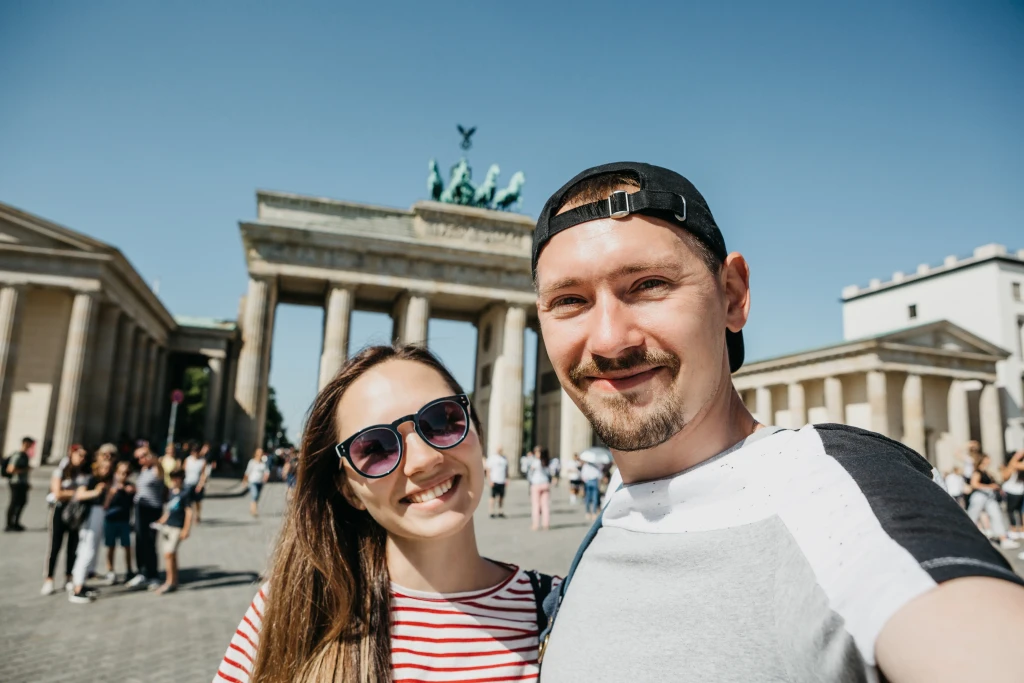
Germany at a glance
(2026 snapshot)
- Population~85 million
- GDP:~$5 trillion (3rd largest globally, after the US and China)
- GDP per capita: ~$59,000
- Internet penetration: ~94%
- E-commerce penetration:~80% of internet users
- Smartphone penetration:~97%
- Top search engine: Google (~92% share)
- Top social platforms: WhatsApp, YouTube, Instagram, LinkedIn (B2B)
- Top marketplaces: Amazon (dominant), Otto, Zalando
What makes digital marketing in Germany distinct?
1. Germany is one of the most privacy-sensitive markets in the world
Germany’s approach to privacy isn’t just regulatory, it’s also cultural. People in Germany grow up with a strong awareness of personal data, transparency, and accountability. There’s a deep-rooted expectation that organisations should handle information carefully, explain why they need it, and give users full control. This shapes both consumer behaviour and how businesses operate.

“Some Germans are genuinely fearful about where their data goes, to the point of avoiding certain apps or entire technology ecosystems. This level of concern can be hard to comprehend for people from other cultures, but here it’s very real. There’s also a historical dimension. Post-war Germany steadily built layers of regulation and control to prevent abuse of power ever happening again. That mindset still shapes how people view GDPR, bureaucracy, and data protection today.”
– Nick, German LIME
For marketers, this means:
- Consent must be explicit, clearly worded, and freely given
- Any sense of over-familiar targeting or vague data use feels intrusive
- Strong privacy practices help build credibility, not just meet compliance
- Retargeting pools are smaller and lookalike modelling is less effective
- GA4, CRM systems, and CDPs need strict data-minimisation setups
- AI-driven personalisation or profiling attracts heightened scrutiny
- Websites targeting Germany must include a legally required Impressum (a company ownership and contact disclosure page). Its absence doesn’t always trigger immediate penalties, but it materially damages credibility. Nick, a German LIME, says: “Without a clear Impressum, websites often struggle with trust signals, and it can even block participation in affiliate programmes or partnerships.”
Strategic takeaway:
Privacy-by-design isn’t optional. Brands that prioritise data protection and privacy in Germany build trust, credibility, and long-term customer relationships.
2. Trust and accuracy drive German decision-making
German consumers and B2B buyers approach decisions methodically. They verify claims, consult multiple sources, and expect transparency at every step.
“Accuracy and accountability matter. We want to know exactly how things work and who’s responsible when something fails.”
– Nick, German LIME
What works in practice:
- Detailed product specifications and side-by-side comparisons
- Recognised certifications such as TÜV, Trusted Shops, Blue Angel, or ISO
- Native reviews, case studies, and real-world examples demonstrating outcomes
- Professional, structured communications that clearly explain features and processes
- Content that provides evidence and methodology rather than relying on promotional language
- From a digital PR perspective, German media expects factual, evidence-based communication and avoids sensational angles or clickbait, so methodology and clear sourcing materially improve performance.
Practical implication:
Brands earn trust by being precise and verifiable. Claims without supporting evidence, vague benefits, or overly promotional messaging can quickly damage digital marketing credibility in Germany.
3. Germany is not a straightforward ‘one-language market’
German is a precise and formal language where tone, word choice, and register directly influence credibility. Even minor errors can make a brand appear careless or untrustworthy.
“One wrong use of ‘Du’ or ‘Sie’ can undo your credibility. AI translations often sound off to German speakers, because they still mix up how the reader is addressed – something that would never happen with a native speaker. This applies not just to small local firms, but also to national supermarket chains and enterprise brands – local phrasing and regional tone are expected even at scale.”
– Nick, German LIME
Key considerations for marketers:
- Translations are not enough. Literal or direct translations often sound stilted or even patronising. Words and phrasing must be chosen to match local expectations. Working with local experts is invaluable.
- Formality signals brand positioning. Deciding between ‘Du’ and ‘Sie’ is not just linguistic; it communicates how a brand is perceived and who it speaks to.
- Regional nuance affects engagement. Phrasing and terminology vary across Bavaria, Saxony, northern Germany, and other areas, which can subtly influence conversion and trust.
- English phrases are acceptable in some B2B contexts. However, even in these cases, German audiences still expect precision, culturally aware phrasing, and clarity. In B2C and most B2B contexts, native German is strongly preferred.
Practical implication:
AI can help speed up translation and localisation, but customer-facing content still needs to be reviewed by native German speakers. Good localisation is not just about grammar; it’s about getting the tone, cultural nuance, and brand voice right. Brands that take the time to do this build trust, while cutting corners can quickly undermine it.
4. Germany’s digital ecosystem differs from the UK/US
It looks familiar but channels behave differently.
Search & advertising:
- Google dominance (around 92%) means competition is intense and CPCs high
- SEO is a long game (as elsewhere) but strongly rewarded
- Microsoft Ads is minimal except in B2B niches
- Meta engagement rates can be lower than in English-speaking markets, so creative must feel native and information-rich
Social & messaging:
- WhatsApp is the primary communication channel for many consumers
- YouTube is a research channel as much as entertainment
- Instagram remains strong; TikTok skews young but is rising fast
- LinkedIn is the B2B backbone, though Xing still matters in some professions
E-commerce:
- Amazon Germany is Europe’s largest Amazon market
- Local giants (Otto, Zalando) are important category-specific channels
Strategic implication:
Simply copying UK/US strategies won’t work. Paid search, SEO, and social campaigns need Germany-specific digital marketing plans.
5. Payment behaviour and returns culture are unique in Germany
Germany’s e-commerce performance is shaped heavily by payment expectations and return habits, both of which differ sharply from the UK/US. Credit card usage is relatively low, with most consumers relying on Girocard, SEPA bank transfer, PayPal, Giropay, or SOFORT. ‘Pay by invoice’ (Rechnungskauf) remains a standard expectation and accounts for a significant share of purchases.
Return rates are also materially higher than in most markets – roughly 1 in 4 online purchases is returned – and brands must factor this into margin modelling, logistics planning, and creative positioning. Clear product information and sizing guidance can meaningfully reduce return volume.
Strategic implication:
Offering locally expected payment methods and planning for higher return rates is essential for e-commerce performance and profitability in Germany.
6. Germany rewards rigour over speed (including with AI)
AI adoption in B2B marketing is measured, cautious, and compliance-driven.
“We’d rather be late than careless… AI adoption is cautious, but also more sustainable in the long run.”
– Nick, German LIME
What this means for digital marketers:
- AI-driven personalisation requires clear disclosure
- AI content must be human-reviewed for tone and precision
- Many buyers prefer human interaction in sales processes
- Paper and physical mail remain common for sensitive topics
- Younger professionals are open to AI, but still privacy-conscious
- According to research, ~33% of German internet users use ad blockers and 56% decline cookies, reinforcing the need for transparency and first-party strategies
Strategic implication:
AI is a helpful tool, but arguably authenticity and human expertise carry even more weight in Germany than other mature markets.
6. Regional identity shapes campaign performance
Germany is a single market politically and economically, but cultural and behavioural differences between regions remain significant and influence marketing outcomes. Regional distinctions include:
- Bavaria: Consumers tend to value tradition, quality, and hierarchy. Messaging that emphasises reliability and established credentials resonates well.
- Berlin: A cosmopolitan, trend-aware audience that is open to experimentation and innovation but expects authenticity and clear value.
- East Germany: Price sensitivity is higher, media consumption patterns differ, and digital adoption can lag slightly behind the national average, as East Germany consists of the so-called “New States” that were formerly part of the DDR and remain more politically conservative today. This history still influences trust in institutions, media, and brands.
- North Germany: Audiences prefer straightforward, reserved communication and respond best to clear, factual messaging.
- Ruhrgebiet: An industrial and B2B-oriented mindset makes this region particularly responsive to technical detail, practical solutions, and evidence-backed content.
Strategic implications:
National campaigns that treat Germany as a homogeneous market risk underperformance. Regional insights should inform creative, messaging, media placement, and content tone. Testing, local adaptation, and region-specific segmentation can deliver significantly higher engagement, conversions, and ROI, particularly for paid social, content marketing, and outdoor campaigns.
In B2B, industries tend to be geographically concentrated: Frankfurt (finance), Hamburg (logistics/aviation), Munich (automotive/engineering), Cologne (chemicals/media), Berlin (startups/fintech/biotech). Aligning campaigns with these hubs improves relevance and lead quality.
7. Value drivers: Quality, longevity, and responsibility
German consumers and B2B buyers place strong emphasis on long-term value and reliability. Purchase decisions are shaped not only by the product itself but by how it performs over time and the trustworthiness of the brand behind it. Key priorities include:
- Durability and engineering quality: Products must perform consistently and meet expectations for longevity.
- Sustainability and environmental standards: Eco-conscious practices are increasingly influential in both B2C and B2B decisions.
- Transparent sourcing and production: Buyers want visibility into how products are made and where materials come from.
- Reliable customer service and warranties: Support after purchase is a key differentiator, especially in higher-value or complex products.
Strategic implication:
Marketing should highlight the factors that matter most to your target audience, whether that’s quality, durability, ethical practices, innovation, or reliability. Case studies, certifications, reviews, and demonstrable features or results resonate far more than broad promises alone. This tailored approach builds trust, supports repeat business, and strengthens long-term brand credibility.
Key dates for the German market (digital marketing focus)
Timing drives engagement in Germany. The Oban Global Marketing Calendar is a fantastic (and free!) planning tool, but meanwhile, here are some key dates to consider:
January
Key dates: New Year’s Day (1st Jan), Winter Sales (early Jan)
SEO for ‘Winter Sale,’ send email campaigns targeting loyal customers, leverage social for New Year offers.
February
Key dates: Karneval (13th–18th Feb) mainly in Rhineland and Southern Germany)
Digital marketing considerations: Regional campaigns, playful B2C content, user-generated content contests, localised social campaigns.
March / April
Key dates: Easter (dates vary), Spring sales
Digital marketing considerations: Gift guides, seasonal campaigns, paid social promotion for spring collections, email reminders for early shoppers.
May
Key dates: Labour Day (1st May), Ascension Day / Mother’s Day
Digital marketing considerations: Focus on B2C promotions, gift marketing, influencer campaigns around Mother’s Day, early summer season prep.
June
Key dates: Pentecost (dates vary), start of summer holidays in some states
Digital marketing considerations: Outdoor lifestyle campaigns, travel & leisure content, regionalised promotions for holiday regions.
July / August
Key dates: Summer holidays (dates vary by state)
Digital marketing considerations: Seasonal content, e-commerce flash sales, travel and experience marketing, maintain engagement while audience is away.
September
Key dates: Regional festivals (late Sept–Oct)
Digital marketing considerations: Localised cultural campaigns perform better than nationalised “Oktoberfest-style” messaging, as Germans tend to engage more with festivals in their own regions (e.g. Canstatter Wasen in Stuttgart).
October
Key dates: German Unity Day (3rd Oct)
Digital marketing considerations: National pride campaigns, awareness content, tie-ins for B2B/consumer messaging.
November
Key dates: Singles’ Day (11th Nov), Black Friday & Cyber Monday (late Nov)
Digital marketing considerations: Major e-commerce campaigns, early planning for Black Friday, social media teasers, email countdown campaigns.
December
Key dates: Nikolaus (6th Dec), Advent (four Sundays before Christmas), Heiligabend (24th Dec), Winter sales. Heiligabend (24th December), rather than Christmas Day itself, is the emotional and commercial focal point for German consumers.
Digital marketing considerations: Gift guides, high-intent e-commerce targeting, festive social media content, email automation for last-minute shoppers, post-Christmas clearance campaigns.
How to win in Germany: A strategic playbook for international brands
Build trust through verifiable evidence
- Provide detailed specifications, certifications (e.g., TÜV, Trusted Shops), and transparent pricing
- Publish German case studies and proof of performance
- Maintain a structured, ongoing approach to local review acquisition
Treat privacy and compliance as core brand assets
- Design consent flows that prioritise clarity and user control
- Use first-party data built on genuine value exchange
- Audit all data-passing integrations for GDPR alignment
Localise properly, both linguistically and culturally
- Avoid direct translations; use native specialists for tone, nuance, and register
- Align “Du”/“Sie” with brand positioning and audience expectations
- Adapt UX, forms, examples, and visuals to local conventions
Prioritise SEO and high-information content
- Serve research-heavy behaviours with comparison guides, FAQs, and explainers
- Build content depth and methodological clarity
- Favour precision over persuasion
Calibrate your channel mix to how Germany actually uses platforms
- Google + YouTube as performance foundations
- WhatsApp for customer service, retention, and direct communication
- LinkedIn for B2B reach; Xing where relevant
- Amazon plus Otto/Zalando for commerce categories
Use AI cautiously and transparently
- Human-review all AI-generated content for tone, precision, and formality
- Avoid over-personalisation unless you can justify it ethically and legally
- Keep data minimisation and disclosure front and centre
Localise regionally when performance depends on it
- Test messaging in, say, Bavaria vs Berlin vs North Germany to understand what works, where
- Adjust tone and value emphasis by region based on your tests
- Use city-level targeting for B2B hubs (Munich, Frankfurt, Hamburg, Berlin, Cologne)
Support e-commerce with locally expected payment journeys
- Offer Girocard, PayPal, SEPA/SOFORT, and pay-by-invoice where relevant
- Provide precise product information to reduce Germany’s structurally high return rates
- Strengthen post-purchase workflows, including returns and warranties
Ready to take your brand into Germany with confidence?
Contact Oban today and let our Local In-Market Experts guide your strategy, execution, and results.