
Nigeria at a glance
2026 snapshot (Figures rounded. Intended for strategic context, not macroeconomic modelling)
- Population: ~240 million (from ~50 million in the 1950s; projected >440 million by 2050)
- GDP: ~$650 billion GDP per capita: ~$2,900 (high inequality; purchasing power varies dramatically)
- Internet penetration: ~65% (mobile-led) Smartphone penetration: ~85% of internet users
- Top search engine: Google (~95%+) Top social platforms: WhatsApp, Instagram, Facebook, X, TikTok; LinkedIn (strong in B2B)
- E-commerce penetration: ~25–30% of internet users (growing, constrained by payments and logistics)
- Marketplaces: Jiji, Konga (dominant locally); international platforms present but adapting to local realities
- Languages: English (official), Hausa, Yoruba, Igbo, Pidgin English and hundreds of others
- Creative sectors: Nollywood (world’s second-largest film industry), music, fashion, arts, culture and digital content
- Diaspora: Significant populations in UK, US, Europe, Canada, and across Africa, shaping brand perception and trends abroad
Nigeria is big, fast, and complicated. Over 240 million people live here, speaking hundreds of languages and following a dizzying mix of local, regional, and global trends. Cities like Lagos and Abuja are crowded, noisy, and endlessly creative, but infrastructure gaps – from electricity to roads to internet access – shape how people work, shop, and connect. Assumptions from other markets often fail. Scale alone does not equal opportunity.
Language, culture, and infrastructure vary widely, and trust is earned, not assumed. Digital consumers are mobile-first, social, and highly relational, relying on friends, influencers, and trusted local voices more than institutions or global brands. Any digital marketing strategy in Nigeria – from content and social campaigns to UX, paid media, and SEO – must treat local insight as central, reflect regional, linguistic, and ethno-religious differences, and work with the realities of everyday life on the ground. Campaigns that pay attention to nuance, local norms, and networks are the ones that build engagement and loyalty.
Market context: Culture, geography, and population
Nigeria’s population growth is among the fastest in the world. In 1950, fewer than 40 million people lived in the country. Today, the number is roughly 240–242 million, making Nigeria Africa’s most populous nation. Growth continues rapidly: UN projections suggest around 400–440 million by 2050, with Nigeria set to overtake the United States as the world’s third-most populous country. Long-term estimates suggest around 450–480 million by the end of the century (and some forecasts even higher).
Implications for marketers:
- Scale of opportunity: A huge population means a vast potential market, especially for youth-focused, digital-first categories.
- Youth-driven growth: Over half the population is under 20, shaping mobile-first habits, social media trends, and early adoption of new products.
- Regional diversity: Nigeria is not a monolith. Major ethnic groups include Hausa, Yoruba, Igbo, and hundreds of smaller groups. Media, content, and purchasing behaviour differ significantly across regions. Campaigns must reflect this diversity.
Infrastructure realities
Population growth and urbanisation put pressure on infrastructure, creating gaps that influence marketing:
- Electricity: Power outages are common, even in major cities. Homes and businesses often rely on generators or alternative energy.
- Transport and logistics: Roads, ports, and public transit are congested or poorly maintained. Delivery and e-commerce fulfilment can be unpredictable.
- Digital connectivity: Internet access is strong in cities but inconsistent elsewhere. Broadband and mobile data coverage vary widely.
- Urban congestion: Lagos, Abuja, Kano, and Port Harcourt face traffic, housing pressure, and stretched public services.
Key takeaway:
Marketing strategies must anticipate friction. UX, checkout flows, and campaign logistics need to reflect real-world conditions. Segmentation by region, language, and urban vs rural markets is essential. Social proof, peer influence, and influencer marketing carry particular weight in Nigeria’s high-context, relational society.
(Read Oban’s article on why Jumia, dubbed the ‘Amazon of Africa’, initially stumbled.)
The Nigerian digital consumer
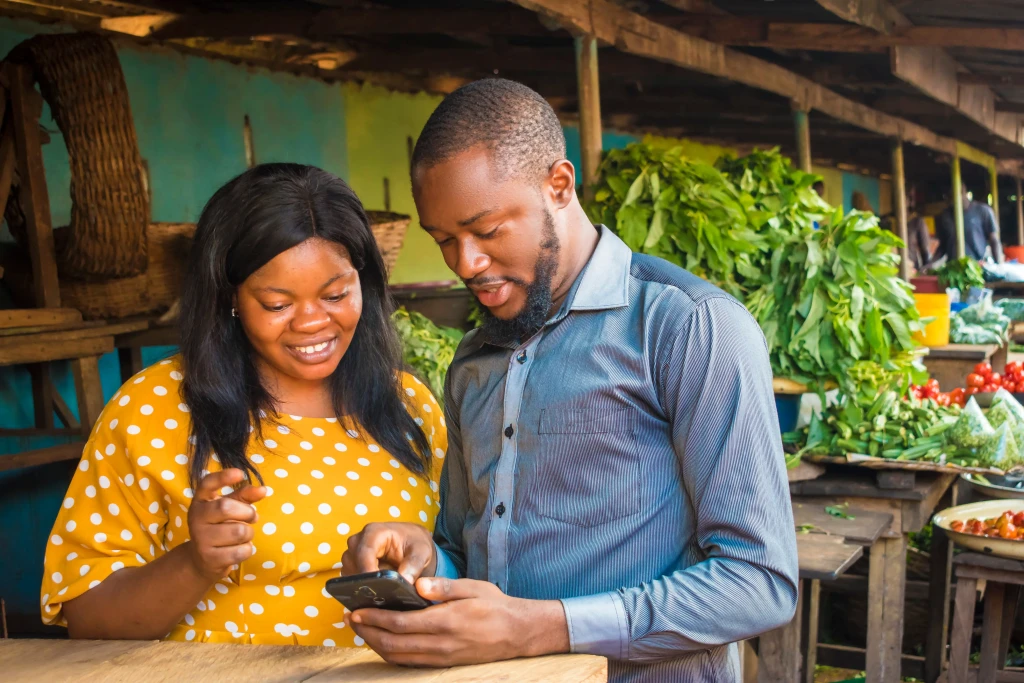
Most Nigerians access the internet primarily through smartphones. Social apps drive discovery, research, and sharing. WhatsApp, Instagram, TikTok, Facebook, and X dominate daily usage. Recommendations from friends, influencers, and trusted local voices often outweigh global brand recognition. Peer validation is central to decision-making.
Local representation matters
Regulations introduced in 2022 ban foreign talent, especially white actors or spokespeople, from national advertising. This reflects a desire to support the local creative industry, the preference for content that reflects Nigerian culture and accents, and a broader sense of national pride. Campaigns that ignore this risk appearing disconnected or inauthentic.
High-context culture
Nigeria is relational. Consumers rely on networks of family, friends, social groups, and diaspora connections. Words alone rarely persuade, since tone, credibility, and trust cues carry weight. Consumers are often sceptical of institutions and global brands, so campaigns must build trust through relationships and peer validation.
Practical implications for campaigns:
- Mobile-first design and low-bandwidth optimisation are essential.
- Social proof drives behaviour; endorsements from peers or respected local voices matter more than global brand claims.
- Messaging should be relational and culturally fluent, integrating humour, regional references, and local authority.
- Trust is built through consistent presence, credible local voices, and storytelling that reflects everyday life.
Platforms and content: Mapping the ecosystem
Search:
- Google dominates, but search is highly mobile-first and practical. Queries often use Pidgin English, local spelling variations, or regionally specific terms.
- Many Nigerians start with YouTube or social apps to find solutions or product reviews before doing a formal search.
Social and marketplaces:
- WhatsApp is the main channel for recommendations and peer-to-peer sharing.
- Instagram, TikTok, Facebook, and X are essential for product discovery and engagement.
- Local marketplaces like Jiji, Konga, PayPorte, and MallforAfrica remain central to online commerce, often handling payments and logistics better than global platforms.
- Influence comes from trusted peers and local creators, not just professional influencers. Nigerian consumers value local knowledge and validation over global branding. That’s why it’s important to work with Local In-Market Experts.

“Platforms like Jiji and Konga make it easy to buy and sell almost anything, from cars to everyday household items, whether new or pre-owned. They are designed to be accessible, so even sellers with limited technical experience can get started quickly.”
– Jacob, Nigerian LIME
UX and payments:
- Mobile-first UX is non-negotiable. Most users arrive on a phone, often on patchy connections. Slow load times, heavy pages, or fussy checkouts do not just frustrate people, they signal risk and unreliability.
- Payment habits are blended and situational. Cash on delivery, bank transfers, and mobile wallets all sit side by side. The choice often depends on the city, the value of the purchase, and how confident the customer feels in that moment. The same person may pay three different ways in the same week.
- Design for how people actually behave. Campaigns that assume full digital comfort or one ‘correct’ payment flow lose conversions quietly. Flexibility, clarity, and familiarity matter more than pushing idealised cashless journeys.
Content marketing:
- Storytelling works best when rooted in local culture, high-context cues, and everyday experience. Nollywood, music, humour, and regional pride resonate; generic, global messaging does not.
- Diaspora audiences are influential: they consume Nigerian content abroad and can amplify campaigns back home.
“Gen Z is driving digital culture. They have a strong appetite for online content and are quick to adopt new platforms and trends. As one of the largest and most digitally engaged audiences in the market, they play a central role in shaping how brands connect, communicate and convert online.”
– Jacob, Nigerian LIME
Payments and commerce: Policy vs reality
In recent years, Nigeria has been pushing toward digital payments, but the gap between policy and everyday behaviour still matters. Cash isn’t just a legacy preference. For many Nigerians, it’s a practical way to manage risk when power, connectivity, delivery, or payment systems don’t always work as promised, and when trust has to be earned transaction by transaction.
Digital payments are growing fast, especially in cities. Mobile money operators processed over ₦71 trillion in transactions in 2024, driven by fintech apps that are easier to use than traditional banks and better suited to mobile-first life. Bank transfers and instant payments now underpin a large share of e-commerce and formal retail transactions, particularly among younger, urban consumers.
At the same time, cash remains embedded in daily life. Point-of-sale cash transactions have fallen sharply, from over 90% in 2019 to around 40% by 2024, but cash still dominates informal markets, transport, street retail, and lower-value purchases. For many people, cash is faster, more predictable, and less risky than digital alternatives that depend on network quality, power supply, or bank uptime.
Adoption is uneven by region and income. Lagos and Abuja behave very differently from secondary cities or rural areas. Even within cities, payment preference can change by category. Consumers may browse online, pay by transfer for electronics, and still expect cash on delivery for groceries or fashion. Failed payments, delayed reversals, and platform outages have made people cautious. That caution is rational, not resistant.
Central bank policies, including withdrawal limits and digital incentives, have accelerated adoption but have not removed cash from the system. Instead, Nigeria operates in a blended payment environment where flexibility matters more than ideology.
What this means for digital marketing and UX:
- Payment choice affects conversion. Consumers abandon journeys that feel rigid or unfamiliar.
- Checkout flows need to reflect how people pay, not how policy assumes they should.
- Clear explanations of payment steps build confidence, especially where digital trust is earned slowly.
- Paid media and content can reduce friction by showing how payments work in practice, using familiar platforms and local cues.
- Social proof around payment reliability often matters more than security badges or generic trust claims.
Common pitfalls that UK brands can fall into
Here are some common traps to avoid if you want to maximise your chance of digital marketing success in Nigeria:
- Treating Nigeria as one market, rather than many, and assuming language, culture, or behaviour travels cleanly across regions
- Designing campaigns for ideal infrastructure, then being surprised when power cuts, congestion, or slow connections affect delivery and conversion
- Assuming digital or cashless adoption is uniform, when payment preferences often shift by city, category, and income level
- Using foreign faces, accents, or imagery that feel disconnected from everyday Nigerian life, or fall foul of post-2022 advertising rules
- Setting strategy from outside the market and relying on data alone, without local interpretation or lived context from on-the-ground experts
These mistakes usually come from moving too fast or importing assumptions that work elsewhere but do not translate here.
Key dates and seasonality: Planning the marketing year
Nigeria’s marketing calendar is shaped by a mix of religion, culture, education cycles, and commercial events. Timing matters because consumer attention and spending fluctuate across the year. Here is what to bear in mind:
Religious and cultural holidays:
- Eid al-Fitr and Eid al-Adha (Islamic calendar; dates vary each year) drive spikes in retail, food, travel, and gift-giving. Northern Nigeria, which has a larger Muslim population, shows particularly strong engagement during these periods.
- Good Friday and Easter (Christian calendar with varying dates each year) have significant influence on the Nigerian market, especially in the Southern part with a larger Christian population.
- Christmas and New Year (25th December – 1st January) are major drivers for urban and southern markets. Retail, FMCG, travel, and digital content all see increased activity.
- National holidays like Democracy Day (12th June) and Independence Day (1st October) often trigger patriotic marketing campaigns and consumer engagement around local brands.
School and university calendars:
The school year typically runs September to July, with breaks varying regionally. Major school holidays (December–January, April, and August) create peaks in leisure, entertainment, and tech consumption, especially among families and youth.
Agricultural and regional cycles:
Rural and semi-urban markets often follow agricultural seasons, with disposable income and shopping patterns linked to harvest periods. Understanding these rhythms is important for FMCG, e-commerce, and payment-driven campaigns outside cities.
Commercial seasonality:
- Black Friday, Singles Day, Valentine’s Day: International shopping events are increasingly adopted by urban Nigerians, particularly younger consumers in Lagos, Abuja, and Port Harcourt.
- Back-to-school (August–September): Tech, stationery, and apparel campaigns spike.
- End-of-year sales: December promotions are critical, but logistics, payment, and mobile network constraints can affect fulfilment and campaign timing.
Busy periods can strain payments, logistics, and mobile networks, so timing needs to align with UX and fulfilment, not just media plans. Oban’s Global Marketing Calendar helps brands plan around these realities so campaigns land at the right moment and feel locally relevant.
What sustainable digital marketing success looks like
Brands that succeed in Nigeria tend to slow down before they scale
- They resist overestimating consumer incomes or assuming aspirational messaging equals spending power. Purchasing decisions are often careful, value-led, and shaped by immediate needs, not long-term brand narratives.
They plan for infrastructure constraints as a constant, not an exception
- Power, connectivity, logistics, and delivery friction all shape how campaigns perform in the real world. That reality is reflected in mobile UX, media weightings, and fulfilment planning, not just creative.
Successful brands also treat Nigeria’s diversity seriously
- Regional, linguistic, religious, and cultural differences affect timing, tone, and channel choice. This is where working with local experts becomes critical. Local insight helps interpret data, avoid costly assumptions, and adapt strategy before problems show up in performance.
Ready to grow your business in Nigeria?
Nigeria isn’t a market for shortcuts. Brands that understand local culture, infrastructure, and how people make decisions online have the best chance of success. If you’re planning digital marketing in Nigeria, get in touch to find out how we can help you navigate the market.