
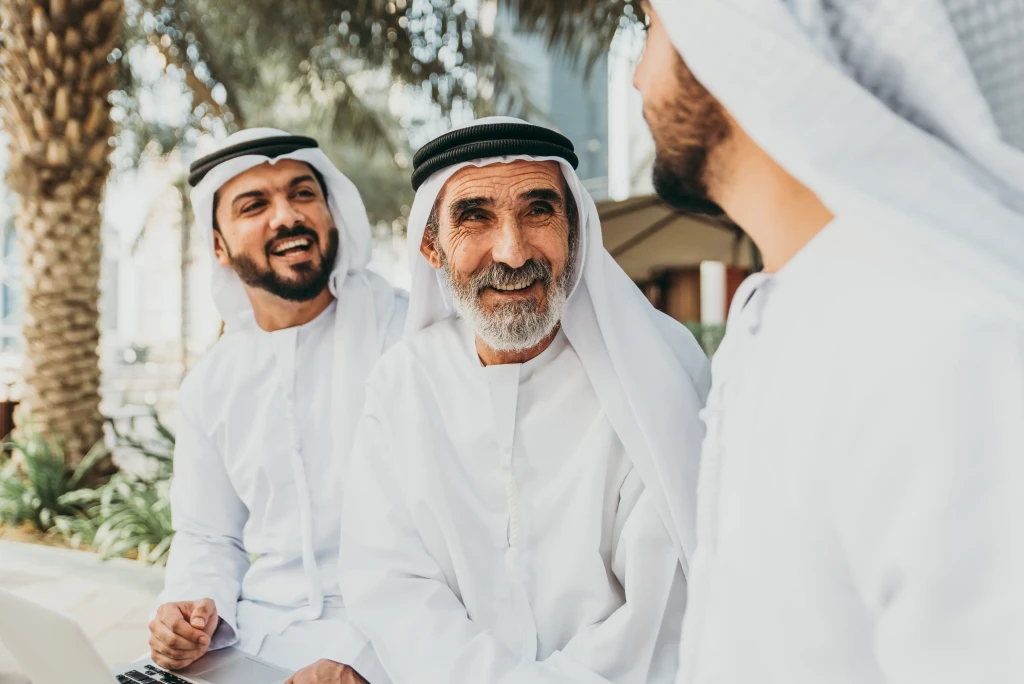

UAE at a glance
2026 snapshot (Figures rounded for context rather than macro analysis)
- Population:~10 million
- GDP: ~US$500 billion
- GDP per capita: ~US$50,000
- Internet penetration: ~99%
- Smartphone penetration: ~96%
- E-commerce penetration: ~75–80% of internet users
- Primary online languages: English and Arabic
- Top search platform: Google
- Top social platforms: Instagram, TikTok, YouTube, Snapchat
- Key commerce platforms: Amazon.ae, Noon, brand-owned sites
The UAE is a small but highly urbanised federation of seven emirates: Abu Dhabi, Dubai, Sharjah, Ajman, Umm Al Quwain, Ras Al Khaimah, and Fujairah. Dubai and Abu Dhabi dominate economic activity, while the other emirates contribute more modestly to population and GDP. The majority of the country’s residents are expatriates, making the UAE’s digital audience exceptionally diverse and international.
It’s a country that’s easy to admire but sometimes hard to predict. Cities sparkle, infrastructure hums, and digital adoption is almost universal. On paper, the market may seem straightforward: wealthy consumers, a young population, and global tastes. In reality, appearances are just the starting point. Consumers pay close attention to every interaction and touchpoint. They move fast online, but make decisions carefully, notice inconsistencies, and respond poorly to anything that feels superficial.
For international brands, this creates a careful balancing act. The UAE offers scale and opportunity, but only for those who understand its nuances. To succeed, brands must read the signals, respect local expectations, and combine ambition with precise execution across SEO, paid media, content marketing, UX, and digital PR.
What makes digital marketing in the UAE distinct?
1. High spend does not mean low scrutiny
The UAE has strong spending power, but that doesn’t mean people buy on impulse. Across retail, luxury, travel, property, and services, consumers are more careful than they were a few years ago. There’s plenty of wealth, but attention is limited, and brand claims are checked closely.
Spending is spread across products, experiences, and lifestyle choices. People want clear reasons to engage. They want to understand what they are paying for, why it matters, and how it fits into their life. This shows up in behaviour:
- Evaluation journeys are longer than many brands expect
- Shoppers compare across multiple platforms and sources before committing
- There is strong interest in context, quality, and the story behind the offer
Practical implication:
Campaigns that rely on aspiration or urgency alone rarely work. Brands need to communicate clearly, show real value, and back claims with proof. Paid media and SEO only deliver when the message is credible and useful, not just loud.
2. Younger audiences raise the bar, not lower it
A large part of the UAE’s population is young. Across the country, the median age is around 31 or 32, and in Dubai more than six in ten people are under 35.
These audiences have seen world-class digital experiences from global brands. They spot generic creative, clunky user journeys, and poor localisation immediately. They expect brands to be thoughtful about design, mobile usability, and the quality of messaging (from a UX and content marketing point of view). They also lose interest quickly when something feels lazy or copied, and this applies across all touchpoints, from social and search to ads.
The UAE’s position as a regional media hub amplifies this. Global brands, agencies, and platforms are constantly testing ambitious campaigns here. Average execution can undermine or potentially even damage a brand’s credibility if digital PR or social storytelling is weak.
Practical implication:
You can’t rely on the market’s reputation or assume young, wealthy consumers will forgive sloppy work. Your digital presence has to earn their attention through clear, relevant, and well‑executed content.
3. Social is not discovery first, it is judgement first
UAE consumers use social media to decide if a brand is real, reliable, and worth their attention. Dubai and Abu Dhabi are full of international campaigns, so audiences have seen the best and the worst. They notice if a profile is half-empty, if comments are ignored, or if stories feel copied from a global template. In a tightly regulated media environment, social channels also signal whether a brand understands local norms. Silence, inconsistency, or sudden content changes are read as warning signs, not neutral gaps.
Influencers can make or break perception. The right local voice adds credibility, while the wrong one can make even a high-end brand look out of touch. Most people check social before they look at a website. They are confirming claims, comparing prices, and seeing if other people are engaging with the brand.
This means that social in the UAE isn’t really optional. A polished campaign won’t convince anyone if the brand doesn’t have an active, consistent presence behind it.
Practical implication:
Brands can’t treat social as a one-off. Posts, replies, and stories need to feel real. Engagement has to be visible. Quick paid bursts without this foundation will be noticed and not in a good way. Done well, social media provides proof that the brand is serious and trustworthy.
4. Online and offline are judged as one experience
In the UAE, people tend not to view online and in-store shopping as separate. Most shoppers use their phones while in a store to check prices, read reviews, compare options, or confirm product details instead of relying only on what they see on the shelf. Various surveys suggest that as many as nine out of ten retail shoppers use digital tools to support their in-store visits.
Many people combine online and in-store shopping into a single journey. Some research online and then buy in person, while others do the opposite, blending the two channels. Retailers are responding by adding digital elements to physical stores. The majority use digital tools at the point of sale or for product discovery, and many report similar revenue from both online and offline channels.
This close connection between channels also shows in how people communicate with brands. Many UAE consumers prefer to use WhatsApp for quick answers and personal help before deciding how to make a purchase.
Practical implication:
Digital and physical experiences are judged together in the UAE, not in isolation. If a brand’s website, social channels, messaging, and in-store service tell a different story, consumers notice. Rather than separate teams owning separate channels, brands need a consistent experience that works smoothly no matter how someone first encounters them, and all digital channels including SEO, paid media, content marketing, and UX should align.
5. Cultural awareness is practical, not theoretical
The UAE is one of the most international markets in the world, which makes its culture complex. Audiences include Emiratis, long-term residents, and expatriates from dozens of countries, so what works for one group can fail with another.
Holidays like Ramadan and Eid are more than dates on a calendar. They shape daily routines, media habits, and how people respond to offers. Modesty rules affect visuals and product presentation, while gifting traditions influence which products feel relevant and how value is communicated. Campaigns that feel generic or copy-pasted from elsewhere are noticed immediately and often dismissed.
Boundaries in the UAE are shaped by both culture and regulation. Brands need to be careful with humour, symbolism, and advocacy themes that may work in Western markets but feel inappropriate here. Superficial localisation is obvious: a simple translation or a global campaign swapped into Arabic signals low effort. Understanding local priorities, expectations, and everyday rhythms is essential.
Practical implication:
Working with Local In-Market Experts pays dividends. Planning, creative decisions, and timing all need to consider the audience’s cultural framework. Getting local details right can make the difference between a campaign that builds trust and one that undermines it.
6. English dominates, but sloppy English still fails
English dominates digital in the UAE, but fluency alone doesn’t make content convincing. Readers are used to high-quality international campaigns, and anything that feels like a copied template or casual global copy stands out. Phrases that work in the US or UK can come across as vague or tone-deaf here.
Arabic isn’t always required, but when it is used, it matters more than most brands realise. A poorly translated caption, awkward grammar, or stiff phrasing is immediately obvious. Even English-first audiences notice it, because it signals whether the brand understands the market or is just recycling global assets. High-quality Arabic is a proof point of competence and respect.
Practical implication:
Every piece of copy is judged. Translation alone is not enough. Words must feel deliberate, natural, and tuned to the cultural context. If language is weak, everything else – design, UX, pricing – is read through a lens of doubt.
7. E-commerce works well, until it doesn’t
E-commerce in the UAE is highly developed, and consumers have high expectations. Delivery speed, transparency, and post-purchase service shape how people perceive the brand. Shoppers notice even small gaps: vague delivery times, complicated returns, or limited payment options can quickly erode trust. Key patterns include:
- Low tolerance for unclear delivery promises or delays
- Close attention to returns, refunds, and exchange processes
- Strong preference for familiar and trusted payment methods, including credit and debit cards, cash on delivery, and increasingly local mobile wallets
- High sensitivity to customer service, especially rapid responses through WhatsApp or chat
Operational weaknesses can undo even the most effective digital marketing. Campaigns that drive clicks but fail at fulfilment, checkout, or payment reliability frustrate consumers and damage credibility.

“When businesses rely too heavily on poorly designed AI chatbots in call centres, WhatsApp and apps, it can do more harm than good. If the assistant only handles a few set scenarios, struggles to pass customers to a real person, or gives irrelevant answers, people quickly become frustrated and lose trust. We’re seeing this happen across banking, insurance, telecoms, retail and loyalty programmes.”
– Yousef, UAE LIME
Practical implication:
Performance marketing and operations are inseparable in the UAE. To convert clicks into lasting business, brands must ensure smooth delivery, flexible and trusted payment options, and responsive support.
Key dates for the UAE market (digital marketing focus)
Seasonality in the UAE is shaped by retail calendars as well as shifts in daily rhythm, attention, and intent. The challenge is not knowing when demand exists but understanding how people behave during each period.
January - February:
- Strong retail, travel, and lifestyle demand
- B2B planning cycles restart
This is a reset window. Consumers and businesses are open to new propositions, but scrutiny is high.
March – April (Ramadan dependent):
- Ramadan reshapes daily routines
- Late evening digital usage increases
- Subtlety and relevance matter more than push
Ramadan shifts both timing and tone. Engagement peaks later in the day, and messaging is judged more carefully. Hard selling tends to underperform; relevance, usefulness, and respect perform better.
May – June (Eid period):
- Eid drives gifting, retail, and travel
- Short, high-intent decision windows
Eid compresses decision-making. Intent is high and timelines are short, leaving little tolerance for unclear offers, slow delivery, or weak service.
July – August:
- Summer travel dominates
- Local retail softens, mobile usage remains high
Attention fragments rather than disappears. Mobile use remains strong, but purchase intent shifts toward travel, services, and future planning. This period suits lighter-touch activity and pipeline building rather than forced conversion.
September – October:
- Business activity accelerates
- Property, education, and financial services pick up
One of the strongest strategic windows of the year. Projects restart, long-consideration categories regain momentum, and earlier brand investment begins to convert.
November:
White Friday drives strong retail intent (this is the Middle East’s version of Black Friday – the term ‘Black’ is avoided for cultural reasons). It is highly competitive and execution-led. Price alone is no longer enough; delivery, returns, and post-purchase experience shape perception.
December:
- Year-end retail and travel peak
- High competition, fast decisions
Demand is high but patience is low. Brands without clear differentiation or operational readiness struggle to cut through, regardless of spend.
Oban’s Global Marketing Calendar helps brands map local moments like Ramadan and White Friday against global campaigns and budget cycles, reducing last-minute localisation and improving performance in a high-scrutiny market.
How to win in the UAE: A strategic playbook for international brands
Assume scrutiny, not indulgence
- UAE consumers spend, but they judge carefully. Every claim, every offer, every touchpoint is evaluated. Brands need to give clear reasons to engage, back up claims with proof, and make every interaction count.
Respect boundaries, both seen and unseen
- Compliance, tone, and cultural norms are part of what makes campaigns credible. Humour, symbolism, and advocacy themes that work elsewhere may misfire. Observing local expectations, understanding modesty rules, and timing campaigns around cultural rhythms like Ramadan or Eid are essential.
Earn trust through social
- Social media is a key part of your credibility. Profiles, posts, comments, and replies are all signals. Influencers can amplify trust or expose gaps. Brands need a consistent, responsive presence; posting ads without engagement is noticed.
Think of digital and physical together
- Shoppers move seamlessly between online and in-store experiences. Research, purchase, and post-purchase interactions can happen across multiple channels in a single journey. Operational consistency – including checkout, delivery, returns, and customer support – is just as important as creative or media investment.
Plan for local context, not just translation
- Language is only part of localisation. Content must feel deliberate, natural, and culturally tuned. Timing, tone, visuals, and messaging all affect performance. Even highly fluent English audiences notice if campaigns feel copied from other markets. Working with local experts can make the difference between campaigns that build trust and campaigns that confuse or alienate.
Treat operations as part of marketing
- E-commerce, delivery, payment, and customer service are brand signals, not back-office chores. Consumers abandon carts for slow delivery, opaque refunds, or unfamiliar payment options. Familiar payment methods – cards, cash on delivery, and local mobile wallet – are expected. Marketing and operations must be planned together.
Use speed carefully
- Fast execution is valuable, but cutting corners is visible. Campaigns launched without careful testing, quality control, or operational readiness can damage credibility more than delay would. In the UAE, speed alone never outweighs careful delivery and attention to detail.
Build a calendar, not a campaign
- High-scrutiny markets reward planning. Align campaigns with key moments – Ramadan, Eid, White Friday, summer travel peaks – and map them against global initiatives. Oban’s Global Marketing Calendar helps brands coordinate timing, creative, and operational readiness, ensuring campaigns land effectively without last-minute fixes.
Ready to enter or scale in the UAE?
The UAE responds best to brands that take the market seriously. At Oban, we work with local experts to help international brands create strategies that actually work here, not just go live quickly. Get in touch to talk through a UAE digital approach that fits how people really behave.